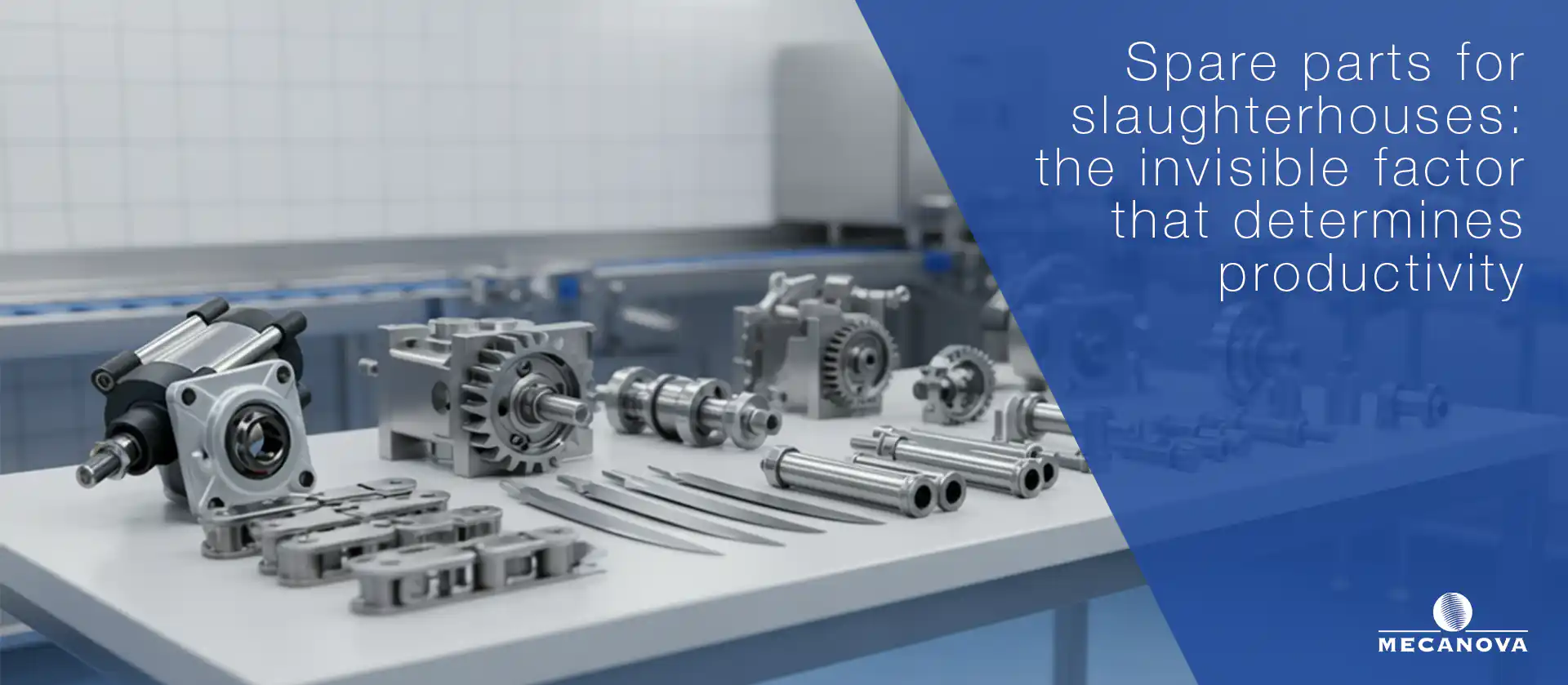
The strategic role of spare parts for slaughterhouses in the meat industry
When people talk about productivity in a slaughterhouse, almost everyone thinks of large machines, automated lines, cutting robots, or sorting systems. That makes sense. They’re the most visible aspects, what you see from the outside. But there’s a much less glamorous element that, in practice, determines whether a facility is productive: Spare Parts for Slaughterhouses.
This is where it’s worth pausing for a moment and looking at the bigger picture. A slaughterhouse isn’t just any factory. It works with perishable products, under enormous sanitary pressure, and with a pace that doesn’t allow for many breaks. Every hour of downtime doesn’t just cost money. It can compromise food safety, generate irreversible losses, and create a domino effect that’s difficult to stop.
Slaughterhouse spare parts play a crucial role in this. They’re the backup plan that prevents chaos, the difference between a controlled incident and a serious problem. And yet, they remain largely overlooked in many industrial strategies. They’re bought hastily, stored improperly, or chosen solely based on price. A classic mistake.
We’re going to discuss why spare parts for slaughterhouses are a strategic component of the business, how they directly impact profitability, and why a sound spare parts policy can extend the lifespan of the entire facility. We’ll draw on real-world experience from a slaughterhouse.
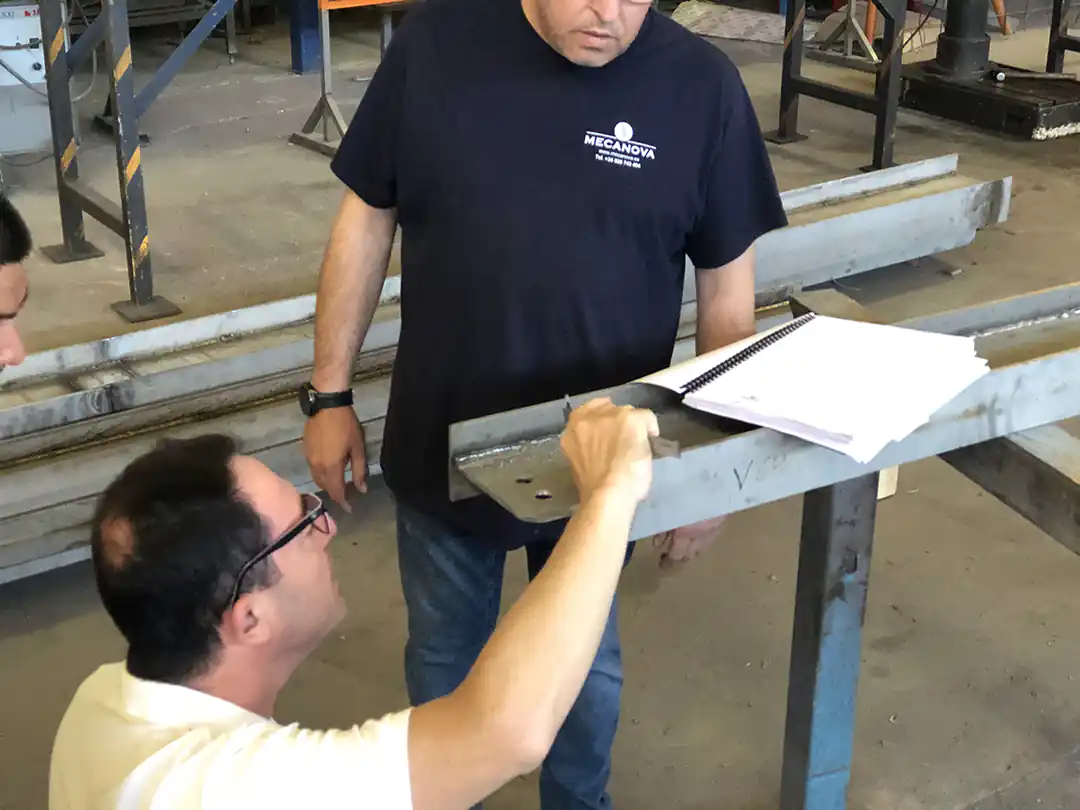
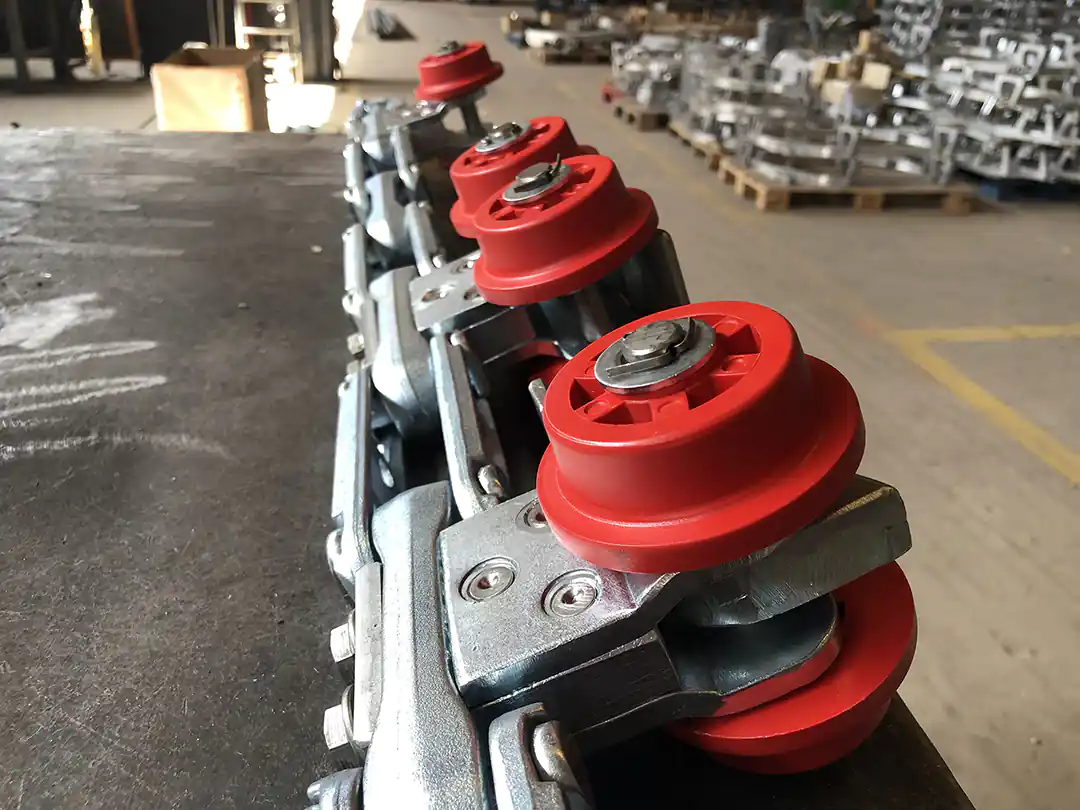
Why spare parts for slaughterhouses are much more than just simple parts
It’s easy to fall into the trap of thinking that a spare part is just that—a piece you replace when something breaks, like changing a lightbulb at home. But in a slaughterhouse, it’s not like that at all. Not even close.
Slaughterhouse spare parts are part of a living system. Every bearing, every chain, every sensor, every blade is working under harsh conditions: humidity, constant cleaning, chemicals, cold, heat, grease, blood. It’s not a kind environment. That’s why, when a component fails, it rarely does so in isolation. It usually has consequences.
This is where the approach changes. A good spare part doesn’t just replace a broken piece. It maintains tolerances, ensures alignment, respects speeds, and prevents vibrations. Simply put, it allows the machine to continue performing as the manufacturer designed it.
Furthermore, there’s another factor that many overlook: time. A correct spare part, properly sized and manufactured with the right material, reduces the frequency of breakdowns. Fewer stoppages, fewer emergency interventions, and above all, less stress for the maintenance team.
That’s why, when we talk about spare parts for slaughterhouses, we’re talking about operational reliability. About stability. About sleeping a little more soundly knowing that, if something happens, there’s a quick and safe solution.
Direct impact on the operational continuity of the slaughterhouse
Imagine a slaughter line at a standstill mid-morning. Animals already received. Staff at their posts. Transport scheduled. Everything running smoothly. And suddenly, a seemingly minor failure. A shaft. A seal. A sensor.
If the replacement part is available and the right one, the problem can be solved in minutes. If it isn’t, the clock starts ticking. And every minute counts. Not only in direct costs, but also in organization, animal welfare, and regulatory compliance.
Spare parts for slaughterhouses are, in this sense, an insurance policy. They don’t prevent incidents from happening, because that would be unrealistic. What they do is reduce their impact. They turn a serious problem into a minor operational issue.
This is where the difference between a well-managed plant and one that isn’t becomes apparent. The former invests in critical spare parts. They know them. They have them located. The latter doesn’t.
And it’s not a matter of size. Thanks to Mecanova’s experience, we’ve seen small slaughterhouses with impeccable spare parts management and large facilities completely exposed. It’s a matter of mindset.
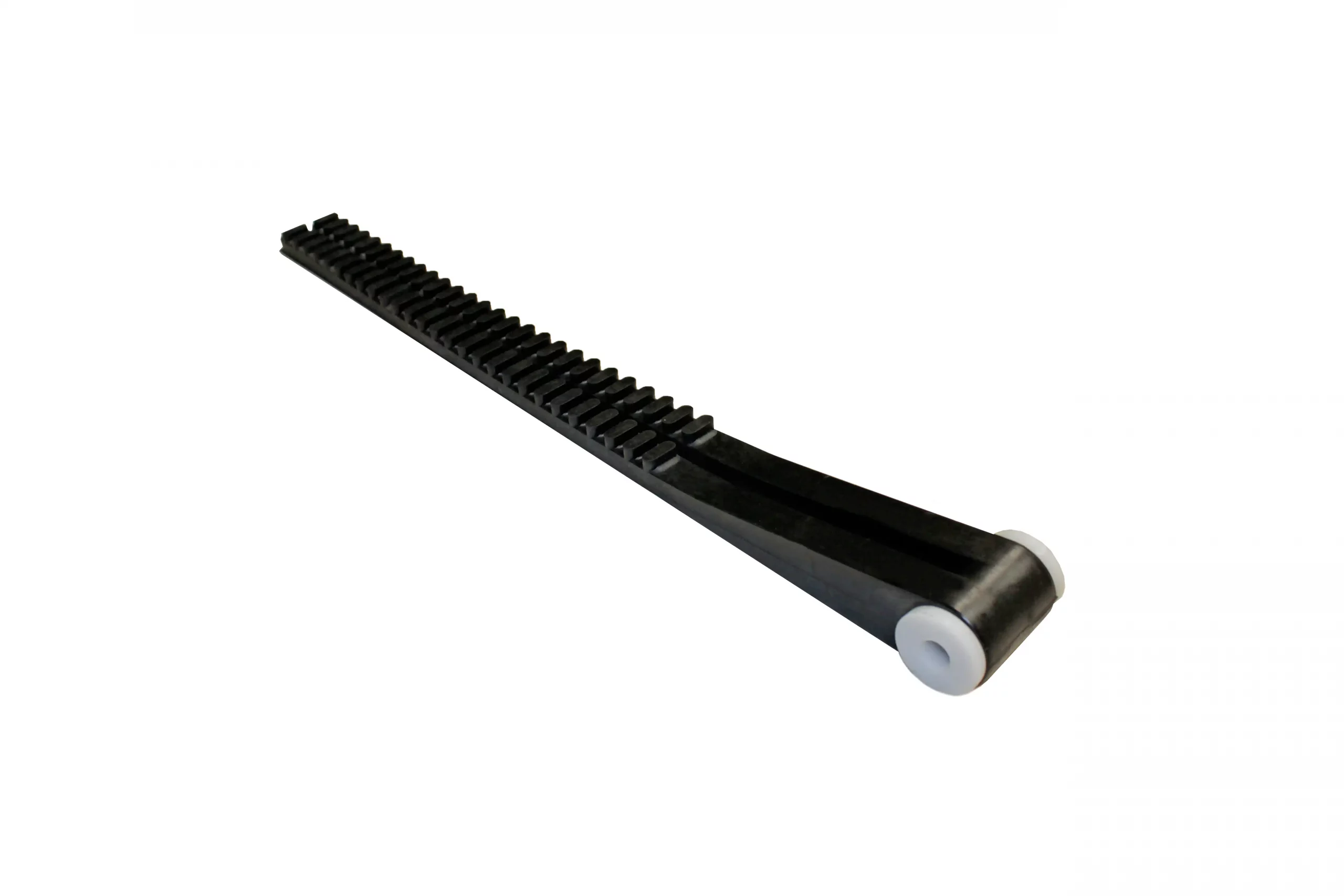
Relationship between maintenance, spare parts and profitability
If there’s one area where the numbers speak for themselves, it’s this. Maintenance and spare parts for slaughterhouses are directly linked to the bottom line, even if it’s not always immediately apparent.
A well-planned preventative maintenance program uses replacement parts before they fail. It doesn’t wait for breakdowns. It replaces components based on operating hours, cycles, or measured wear. That costs money, yes. But it usually costs much less than an unexpected downtime.
Furthermore, the right replacement parts reduce wear on other components. It’s a positive chain reaction. A properly tensioned chain extends the life of motors. A correct bearing prevents vibrations that damage structures. It all adds up.
From an economic standpoint, spare parts for slaughterhouses are not an isolated expense. They are an investment in production stability. And when analyzed with real data, the conclusion is usually quite clear.
How spare parts for slaughterhouses influence the lifespan of machinery
The lifespan of a machine depends not only on its original design. It depends, to a great extent, on how it is maintained. And this is where spare parts for slaughterhouses play a crucial role.
Using unsuitable, low-quality, or poorly fitted spare parts generates minor malfunctions. Nothing dramatic at first, but constant. That kind of silent wear and tear that goes unnoticed until it’s too late.
On the other hand, when the correct spare parts are used—compatible with the original design and specifically formulated for the slaughterhouse environment—the machine ages better. It operates within parameters, maintains performance, and extends its actual lifespan.
This is especially relevant in facilities where the initial investment has been high. Maintaining the machine with good spare parts is, in many cases, the best way to protect that investment.
The real cost of not having the right replacement part
It’s important to be very clear here. The biggest cost of spare parts for slaughterhouses isn’t in buying them. It’s in not having them when you need them.
Prolonged downtime, lost production, overtime, staff stress, missed delivery deadlines, potential penalties. All of that comes at a price. And it’s almost never properly attributed to a lack of spare parts.
Many purchasing decisions are made based solely on the unit price. That’s understandable, but incomplete. The real cost includes risk. And in a slaughterhouse, operational risk is high.
That’s why, when things are analyzed with perspective, spare parts for slaughterhouses cease to be an inconvenient expense and become a tool for control. For foresight. For professionalism.
Spare parts for slaughterhouses and food safety: a critical relationship
If there’s one area where there’s no room for error, it’s food safety. There are no shortcuts or makeshift solutions. And although it’s not always mentioned, spare parts for slaughterhouses are deeply connected to this aspect.
Many health non-conformities don’t stem from major structural failures, but rather from small, worn, poorly fitted, or unsuitable components. A gasket that no longer seals properly. A surface that accumulates residue. A component that’s difficult to clean.
Let’s talk about how spare parts influence hygiene, regulatory compliance, and peace of mind during audits. All of that unseen aspect of daily operations, but which carries significant weight when it comes to accountability.
Cross-contamination and component wear
Wear and tear is one of the biggest silent enemies of food safety. A new component usually performs its function flawlessly. But over time, gaps, microscopic cracks, and uneven surfaces appear.
In a slaughterhouse, this is fertile ground for contamination. Organic matter that isn’t completely removed. Trapped moisture. None of this is usually visible to the naked eye, but it’s there.
Slaughterhouse replacement parts, when replaced on time, nip this problem in the bud. They don’t wait for a non-conformity to occur. They act beforehand. And that makes all the difference.
Here, preventative maintenance, supported by quality replacement parts, arrives precisely when it’s needed.
Materials, Certifications, and Regulatory Compliance
Not all materials are suitable for a food environment. This seems obvious, but mistakes are made in practice. Unsuitable steels. Plastics that age poorly. Rubbers that cannot withstand cleaning products.
Slaughterhouse spare parts must comply with specific regulations. It’s not just a technical matter. It’s legal. And reputational.
An uncertified spare part might seem like a quick fix. But if it causes a problem during an audit, the cost skyrockets. There’s not much room for debate here. Compliance is cheaper than fixing it.
Original vs. compatible spare parts for slaughterhouses in food safety
This is a sensitive and very common issue. Original spare parts usually offer better warranties. They are designed specifically for the machine and the process. But they also tend to be more expensive.
Compatible parts can be a valid option, provided they are well-made and certified. The problem arises when they are chosen solely based on price, without considering materials or design.
In food safety, not all compatible parts are created equal. And spare parts for slaughterhouses, in this context, must be selected based on technical criteria, not just economic ones. That’s why, at Mecanova, we always offer original spare parts.
Cleaning, hygiene and design of spare parts for slaughterhouses
Design matters. A lot. A replacement part with sharp corners, unnecessary cavities, or rough surfaces is a potential problem, even if it functions mechanically.
Well-designed replacement parts for slaughterhouses make cleaning easier. They don’t retain residue. They don’t create dead zones. That saves time, water, and chemicals. And it reduces risks.
This aspect is often undervalued until a health issue arises. Then, suddenly, everything makes sense.
Health audits and the silent role of spare parts
When an audit comes around, everything is scrutinized. And often, problems surface in small details: a damaged spare part, non-conforming material, a makeshift component.
Spare parts for slaughterhouses don’t usually feature prominently in reports. But when they fail, they become a major issue. And not in a good way.
That’s why a sound spare parts policy is also a preventative strategy against audits. Fewer surprises, fewer explanations, and more control.


Choosing the right slaughterhouse spare parts supplier
This brings us to a critical point for many companies: choosing the right spare parts supplier for slaughterhouses. It’s not just about buying parts. It’s about selecting a partner that guarantees continuity, quality, regulatory compliance, and support when it’s needed most. A reliable supplier can be the difference between a smoothly running plant and one that isn’t.
Sector experience and knowledge of the process
In a slaughterhouse, not all suppliers are created equal. Some know the parts, but are unaware of the realities of daily operations. Others, like Mecanova, understand downtime, hygiene protocols, and maintenance cycles.
An experienced supplier in the sector anticipates problems. They recommend spare parts before the need arises, know which parts wear out faster, and help plan inventories realistically.
It’s not just about convenience. It’s about efficiency. Fewer surprises, less improvisation, and a much more predictable workflow. When it comes to spare parts for slaughterhouses, this experience is invaluable, and at Mecanova, we understand its importance.
Availability, deadlines and technical support
The immediate availability of a critical spare part can save a production line. That’s why a reliable supplier like Mecanova ensures short lead times, adequate stock, and responsive technical support.
There’s nothing worse than waiting days or weeks for a part that brings the entire plant to a standstill. Practical solutions, efficient logistics, and installation assistance, if needed, are essential.
Time is money. And in the slaughterhouse, where the product is perishable, it’s even more crucial.
After-sales service and advice
A supplier’s job doesn’t end with delivering the part. The true value lies in after-sales service: operator training, assembly assistance, maintenance recommendations, and troubleshooting.
Slaughterhouse spare parts aren’t “plug and play.” They sometimes require adjustments, calibrations, or process knowledge. A supplier who provides support during these phases significantly increases the reliability of the installation.
The supplier as a partner, not just as a seller
At the end of the day, the relationship with your slaughterhouse parts supplier must be one of trust and collaboration. You’re not just buying parts; you’re buying peace of mind, continuity, and support in critical situations.
Viewing your supplier as a partner allows you to plan, reduce risks, and optimize resources. A strategic relationship with a good supplier has tangible returns: fewer downtimes, less waste, guaranteed regulatory compliance, and increased productivity. That’s why at Mecanova, we support you throughout the entire process.
If you want to purchase spare parts for slaughterhouses, contact one of our specialized advisors and ensure your permanent stock.