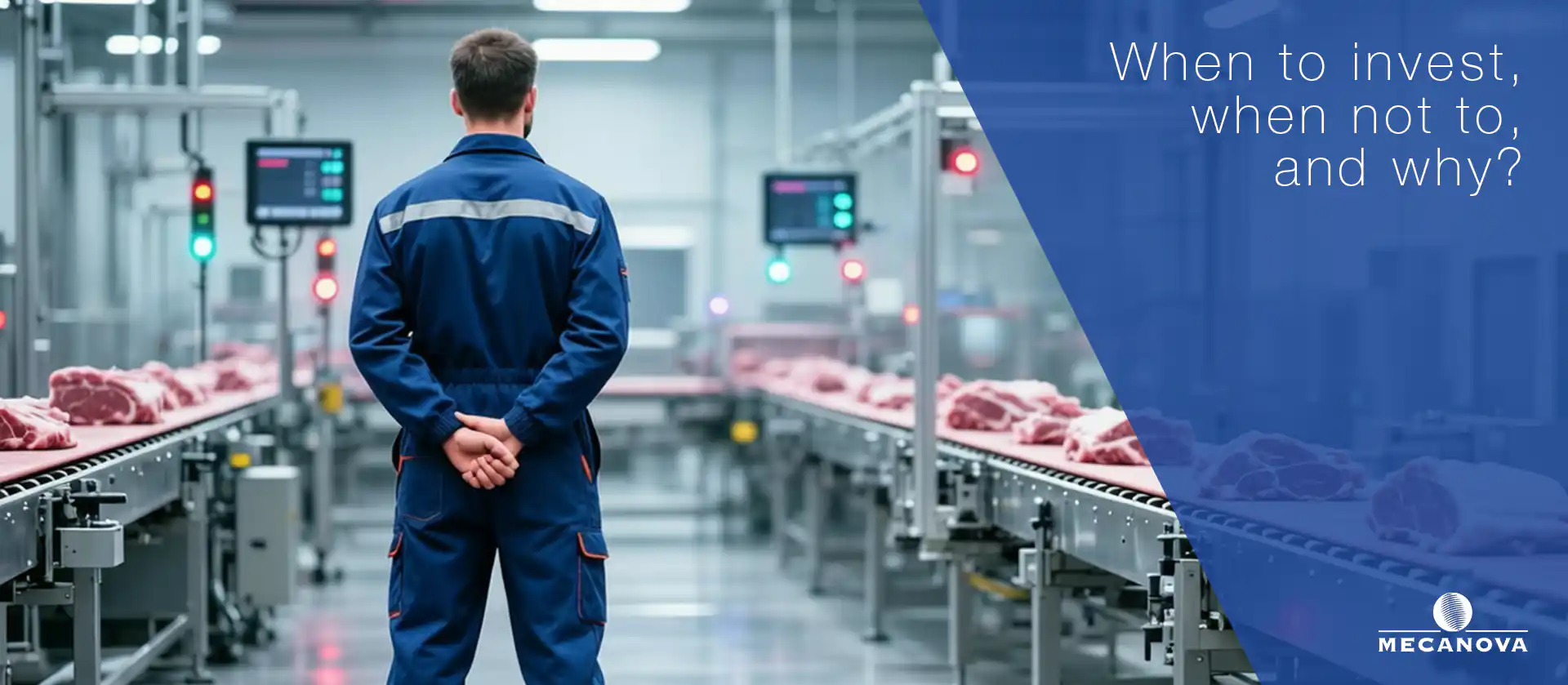
Smart automation in slaughterhouses around the world has become one of the key drivers of transformation in the meat industry. However, not all investments in technology generate the expected return.
In recent years, many facilities have opted to automate processes with the aim of improving productivity, reducing costs or minimising reliance on labour. In some cases, the results have been excellent. In others, the reality has been quite different: underutilised systems, operational complexity or slower-than-expected returns.
The difference does not lie in the technology. It lies in the criteria used to decide whether to automate.
The companies that are performing best are not those that invest the most, but those that make the best decisions about when to invest… and when not to.
1. Smart automation in slaughterhouses is not the aim; it is the result
One of the most common mistakes is to view automation as an end in itself. However, the right question is not ‘What can I automate?’, but rather:
What real problem am I solving with this investment?
Automation makes sense when:
- The process is repetitive and stable.
- There is a clear labour shortage.
- The aim is to improve the consistency and quality of the product.
- There is a direct impact on productivity or costs.
When these factors are not present, smart automation in slaughterhouses can become a complex solution to a problem that did not require one.
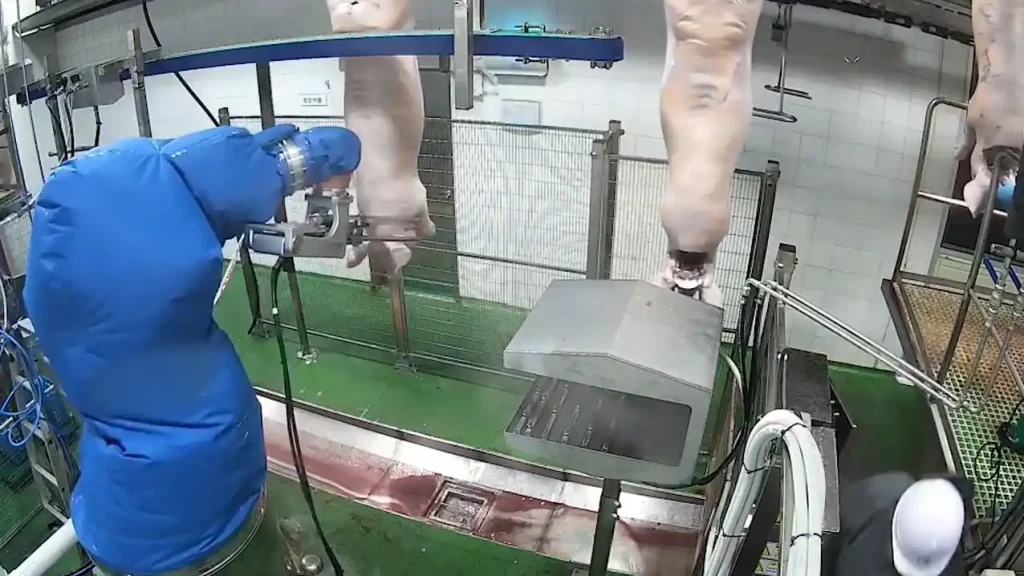
2. Where automation is usually worthwhile
Generally speaking, the most profitable investments in automation tend to focus on:
Repetitive, high-volume processes
Where variability is low and standardisation delivers immediate value.
Physically demanding tasks
They reduce fatigue, improve safety and reduce staff turnover.
Critical points along the line
Where a bottleneck limits overall production capacity.
Areas with a direct impact on quality
Where the consistency of the process affects the final outcome of the product.
In such cases, automation in slaughterhouses becomes ‘smart’, as it not only improves efficiency but also stabilises the process and makes it easier to control.
3. Where automation does not always make sense
It is just as important to understand where not to invest as it is to know where to invest.
Automation tends to produce poorer results when:
- The process is subject to significant variability (raw materials, size, conditions).
- Production is low or irregular.
- Labour costs are not a real problem.
- An attempt is being made to automate the process without first optimising the workflow.
Automating an inefficient process does not solve the problem. It makes it more expensive and harder to rectify.
4. The mistake of introducing smart automation in slaughterhouses too soon
In many cases, investment is made in technology before it has been properly defined:
- The floor plan.
- Product flow.
- The durations of each process.
This means that automation is adapted to an imperfect system, rather than building an optimised system from the outset.
The correct sequence should always be:
- Understanding the process.
- Optimise it.
- Standardise it.
- Automate what really adds value.
Skipping steps often leads to structural inefficiency.
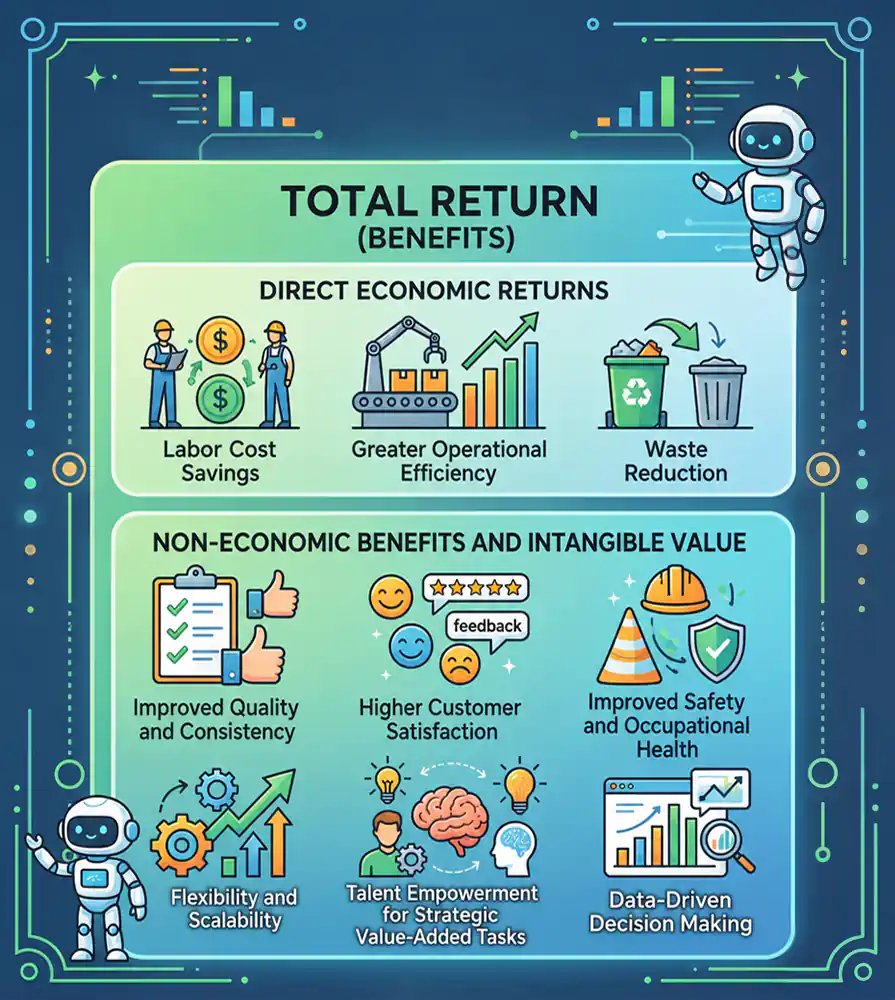
5. Cost versus return: looking beyond the figures
The return on investment from smart automation in slaughterhouses should not be measured solely in direct economic terms.
The following should also be taken into account:
- Reducing reliance on key staff.
- Greater production stability.
- Improvement in product quality.
- Capacity for growth without expanding the infrastructure.
In many cases, the true value of automation lies in what it prevents, not just in what it produces.
6. The key: a comprehensive overview of the smart automation process in slaughterhouses
The best decisions regarding smart automation in slaughterhouses are not made by analysing a single machine, but by understanding how it fits into the plant as a whole.
An investment may seem appropriate when viewed in isolation, but may not be so when:
- It causes imbalances on the line.
- It requires changes to other unforeseen processes.
- Operational complexity is increasing.
Smart automation in slaughterhouses is automation that simplifies the system, not the sort that complicates it.
Please note…
In the meat industry, automation is not a question of modernisation, but of judgement. It is not about having more technology, but about having the right technology in the right place.
The companies that are performing best are not those that invest the most, but those that make the best decisions about when to invest… and when not to.
Because, in many cases, the best investment is not to automate more, but to automate better.